Lowering Carbon Footprint in Suburbs
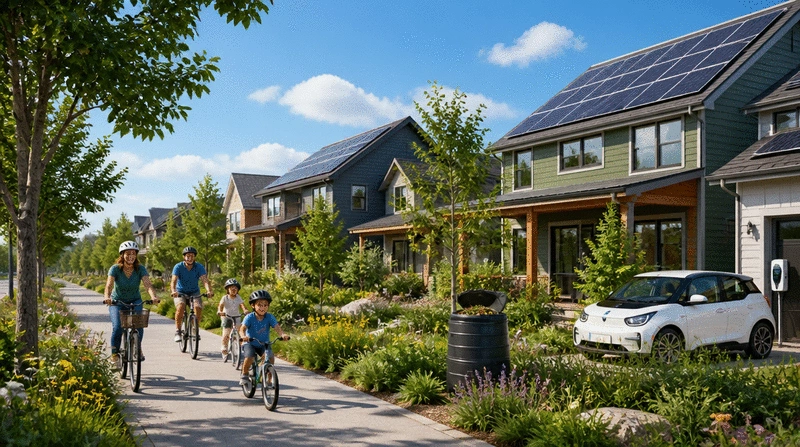
What if you could transform your suburban community into a greener haven with just a few mindful choices? The impact of our daily actions on the environment is profound, especially in suburban settings where lifestyles often contribute significantly to carbon emissions. Understanding the importance of reducing our carbon footprint is essential for creating a healthier environment for future generations.
What You Will Learn
- Recognize the key components of a carbon footprint and its impact on suburban communities.
- Understand how transportation choices, energy consumption, and waste management contribute to higher emissions in suburbs.
- Explore effective carbon offsetting strategies, including third-party programs and community solar projects.
- Identify barriers to adopting sustainable practices in your community and learn how to overcome them through education and engagement.
- Discover the role of smart home technology in reducing energy usage and promoting sustainability.
- Engage in local sustainability efforts and understand how collective community actions can lead to significant environmental change.
Impact of Suburban Lifestyle on Carbon Emissions
This visual highlights key factors contributing to higher carbon emissions in suburban areas compared to urban environments.
Transportation Emissions
Dependence on single-occupancy vehicles increases emissions due to longer commutes.
% of emissions from transportation in suburbs: 72%
Energy Consumption
Larger homes require more energy for heating and cooling.
% of emissions from residential energy use: 20%
Waste Management
Less recycling participation leads to increased landfill waste.
% of waste recycled in suburbs: 30%
Community Actions
Collective efforts can greatly reduce emissions through eco-friendly practices.
Potential reduction through community initiatives: 50%+
Understanding the Importance of Reducing Carbon Footprint in Suburban Areas
We often think about the impact of our daily choices on the environment, but what does it really mean to reduce our carbon footprint? In simple terms, your carbon footprint measures the total greenhouse gases, particularly carbon dioxide (CO2), that are emitted directly or indirectly through our actions. In suburban areas, where homes often have larger footprints and longer commutes, understanding this concept is crucial for fostering a greener community. By reducing our carbon emissions, we can improve air quality and create a healthier environment for our families.
As an advocate for sustainable living, I’ve seen firsthand how our suburban neighborhoods can benefit from embracing eco-friendly practices. It’s more than just a trend; it’s about creating a lifestyle that prioritizes our planet and future. When we reduce our carbon footprint, we not only make our surroundings cleaner but also inspire those around us to join the movement toward sustainable living.
Defining Carbon Footprint and Its Impact on Suburban Communities
In the context of suburban communities, our carbon footprint stems from various activities, including transportation, energy use in homes, and waste management practices. For instance, if you drive to work every day or have an energy-intensive household, your individual contribution to carbon emissions can be significant. This collective impact across neighborhoods can lead to serious environmental challenges like climate change and poor air quality.
But the positive news is that every action counts! By understanding our carbon footprints, we can take small steps that collectively lead to big changes. This includes making conscious choices about how we travel, how we consume energy, and how we manage waste. Together, we have the power to reshape our suburban communities into greener spaces, benefiting not just ourselves but future generations as well.
- Reducing energy consumption in homes
- Adopting public transportation and carpooling
- Participating in recycling and waste reduction efforts
Why Suburbs Contribute More to Carbon Emissions
Believe it or not, suburbs tend to contribute more to carbon emissions than urban areas! This is primarily due to their design and infrastructure. Many suburban residents rely on cars for transportation, leading to longer commutes and increased emissions. Also, the larger homes in suburbs usually consume more energy for heating and cooling, adding to the problem.
It's not just about the cars or the houses; it’s about our lifestyle choices. Many of us love the open spaces and quiet streets of suburban living, which is wonderful! However, to truly enjoy this lifestyle, we must also commit to reducing our environmental impact. By implementing sustainable practices at home and in our communities, we can minimize emissions and create a cleaner, healthier environment. For more insights on managing waste effectively, explore suburban strategies for smart waste.
- High dependency on single-occupancy vehicles
- Greater energy consumption due to larger homes
- Limited access to public transportation
As we work together at Greener Suburbs, I encourage you to reflect on your own habits and consider how they contribute to our community's carbon footprint. Let's start conversations, share ideas, and inspire each other to make changes that benefit our planet. After all, every little effort counts towards creating a more sustainable future!
Quick Summary
Here's a brief recap of the key points discussed so far:
- Understanding the carbon footprint and its impact on suburban communities is essential for fostering a greener lifestyle.
- Suburbs contribute more to carbon emissions due to reliance on cars and larger homes, making sustainable practices even more crucial.
- Carbon offsetting and community initiatives provide effective strategies for residents to mitigate their carbon footprints.
Exploring Carbon Offsetting Options for Suburban Residents
As we look for ways to reduce our impact on the environment, carbon offsetting has become an important tool for suburban residents. By understanding how carbon offsetting works, we can take steps to balance out our emissions and contribute to a healthier planet. Let’s dive into how these options can work for our communities and what we can do to participate!
First, it's crucial to understand third-party carbon offset programs. These programs allow individuals to invest in projects that reduce or remove carbon dioxide from the atmosphere, such as reforestation or renewable energy initiatives. By purchasing offsets, we can effectively compensate for our own emissions—like those from our homes and cars. It's an excellent way to be proactive about our carbon footprints!
Understanding Third-Party Carbon Offset Programs
Third-party carbon offset programs offer a structured approach for individuals seeking to offset their carbon emissions. These programs typically include a variety of projects aimed at reducing greenhouse gases. Here are some common types of projects:
- Reforestation initiatives that plant trees to absorb CO2
- Renewable energy projects, such as wind or solar farms
- Methane capture from landfills or agricultural operations
Participating in these programs can not only lessen our carbon footprint, but also support local economies and global sustainability efforts. Isn't it great to think that our small contributions can lead to significant changes?
Subscription Models for Carbon Neutrality: A Practical Approach
Another exciting option for suburban residents is subscription models for carbon neutrality. These services allow individuals to pay a monthly fee that funds carbon offset projects. Here’s why this approach can be so effective:
- Predictable costs make it easy to budget for sustainability efforts.
- Regular updates on the impact of your contributions help keep you engaged.
- Convenience and accessibility allow for easier participation in sustainability.
By subscribing, we can make a consistent effort to improve our impact on the environment. It’s like having a green buddy cheering us on as we make better choices!
Community Solar Projects as a Carbon Offsetting Strategy
One innovative approach to carbon offsetting in suburban areas is through community solar projects. These projects allow residents to invest in solar energy without having to install panels on their own homes. Instead, the energy generated is shared among community members, providing numerous benefits:
- Reduced energy costs for participating households
- Decreased reliance on fossil fuels
- Strengthened community ties as neighbors collaborate on sustainability
Community solar projects not only help offset carbon emissions, but they foster a sense of collaboration that mirrors the mission of Greener Suburbs—bringing neighbors together for a common goal!
Assessing the Scale and Impact of Suburban Emissions Reduction
Understanding the scale of our emissions is crucial for making informed decisions about how we can reduce them. By gathering data and evaluating our impact, we can create targeted strategies for improvement. This process allows us to see how our suburban communities fit into the global picture.
Suburban areas often experience unique challenges and opportunities when it comes to emissions reduction. By analyzing data on our specific environments, we can identify the most effective ways to lower our carbon footprints. It’s a powerful way to drive meaningful change!
Data Insights: Suburban Emissions in a Global Context
By looking at data insights, we can understand how suburban emissions contribute to global climate change. Here are some factors to consider:
- Suburban areas often have higher per capita emissions due to car dependency.
- Energy consumption in homes can vary widely, influencing overall emissions.
- Collective community actions can lead to significant reductions on a larger scale.
Understanding these insights allows us to tailor our efforts to effectively address emissions in our neighborhoods. Change starts with awareness!
Calculating the Potential for Transportation Emission Reductions
Transportation is a major contributor to carbon emissions in suburban communities. By calculating the potential reductions we can achieve, we can develop strategies to lessen our impact. Here are some key areas to focus on:
- Encouraging carpooling and ridesharing to reduce the number of vehicles on the road.
- Promoting public transit options to lessen reliance on personal vehicles.
- Implementing bike-sharing programs to encourage cycling as a viable alternative.
Every little bit counts! By working together as a community, we can tackle transportation emissions and create a cleaner and greener future for everyone.
FAQs About Reducing Carbon Footprint in Suburbs
Here are some frequently asked questions to help you better understand and engage with reducing your carbon footprint in suburban areas:
- 1. What is a carbon footprint?
- A carbon footprint measures the total greenhouse gases, particularly carbon dioxide (CO2), emitted directly or indirectly through our actions. In suburban areas, this includes emissions from transportation, home energy use, and waste management.
- 2. Why do suburbs contribute more to carbon emissions than urban areas?
- Suburbs often contribute more due to reliance on single-occupancy vehicles for longer commutes, larger homes that require more energy for heating and cooling, and sometimes less participation in recycling compared to urban centers.
- 3. How can suburban residents reduce their carbon footprint?
- Residents can reduce their carbon footprint by using public transportation or carpooling, reducing energy consumption at home, adopting smart home technologies, participating in recycling and waste reduction efforts, and engaging in carbon offsetting programs or community solar projects.
- 4. What are third-party carbon offset programs?
- These programs allow individuals to invest in projects that reduce or remove carbon dioxide from the atmosphere, such as reforestation, renewable energy initiatives, or methane capture. This helps compensate for personal emissions.
- 5. How do community solar projects work for carbon offsetting?
- Community solar projects enable residents to invest in solar energy without installing panels on their own homes. The energy generated is shared among community members, reducing reliance on fossil fuels and lowering energy costs for participants.
- 6. What role does smart home technology play in sustainability?
- Smart home technologies like smart thermostats, energy monitoring systems, and smart irrigation systems help optimize energy use, conserve resources, and reduce overall household carbon emissions.
- 7. How can communities encourage behavioral changes for sustainability?
- Communities can encourage change through public awareness campaigns, environmental education efforts, workshops on eco-friendly practices, and showcasing successful local initiatives like community gardens or clean-up events.
Encouraging Community-Level Behavioral Changes for Sustainability
Behavioral changes at the community level are essential in fostering sustainability. By inspiring others to adopt eco-friendly practices, we can create a more significant impact. But what are the barriers that prevent residents from embracing these changes?
Identifying these barriers is the first step toward overcoming them. Together, we can develop creative solutions that make sustainable living more accessible and appealing to everyone!
Identifying Barriers to Adoption of Sustainable Practices
Understanding what holds people back from adopting sustainable practices is vital. Here are some common barriers:
- Lack of knowledge about eco-friendly options
- Perception that sustainable practices are expensive or time-consuming
- Limited access to resources or infrastructure for sustainability
Once we recognize these challenges, we can work together to break them down. Education and community engagement play a crucial role in this process!
Showcasing Successful Suburban Case Studies and Community Initiatives
Highlighting successful case studies can inspire others to take action. Here are some examples of initiatives that have made a difference:
- Community gardens that promote local food production
- Neighborhood clean-up events that foster community spirit
- Recycling drives that help reduce waste and educate residents
These examples show how collective efforts can lead to meaningful change in our neighborhoods. Each success story can motivate us to participate and contribute to a sustainable future!
Public Awareness Campaigns and Environmental Education Efforts
Public awareness campaigns are essential in sparking interest in sustainability. Here are some initiatives that can raise awareness:
- Workshops on composting and recycling
- Social media campaigns focusing on eco-friendly practices
- Collaborative events with local schools to engage youth in sustainability
By working together to promote awareness and education, we can cultivate a more sustainable mindset in our communities. It’s exciting to think about the momentum we can build!
The Path Forward: Building a Sustainable Future in Suburbs
As we look to the future, it’s clear that the path to sustainability in our suburbs requires dedication and action. Every homeowner and resident has a role to play in reducing our carbon footprints. Are you ready to join the movement?
Taking small steps can lead to significant change. Here are some practical suggestions for making a difference:
- Participate in local clean-up events
- Adopt energy-efficient practices at home
- Engage with neighbors to share resources and ideas
By working together, we can create a greener, healthier environment for ourselves and future generations. Let’s make our suburban communities shining examples of sustainability!
Call to Action: Get Involved in Local Sustainability Efforts
Now is the perfect time to get involved! Local sustainability efforts need passionate residents like you. Consider joining Greener Suburbs to connect with like-minded individuals and make a positive impact in your community. To learn more about how you can contribute, explore ways to join our eco-friendly cleanup efforts.
Engagement can take many forms, from volunteering for community clean-ups to advocating for environmental policies. Every action counts! So, what will you do to make a difference?
Exploring the Role of Smart Home Technology in Sustainability
Lastly, let’s not forget about the role of smart home technology in promoting sustainability. Implementing smart devices can help homeowners monitor and reduce their energy usage effectively. Here are a few examples:
- Smart thermostats that optimize heating and cooling
- Energy monitoring systems that track consumption
- Smart irrigation systems that conserve water
By integrating these technologies into our homes, we can further our commitment to sustainability and inspire others to follow suit. Together, we can create a more sustainable future for our suburban communities! For additional ideas on how to enhance your home's eco-friendliness, check out these eco-friendly suburban home tips.
Recap of Key Points
Here is a quick recap of the important points discussed in the article:
- Understanding and reducing carbon footprints is essential for creating healthier suburban communities.
- Suburban areas contribute more to carbon emissions due to car dependency and larger energy consumption in homes.
- Engaging in third-party carbon offset programs can help balance out personal emissions through investments in eco-friendly projects.
- Subscription models for carbon neutrality provide a convenient way for residents to contribute to sustainability efforts.
- Community solar projects can reduce energy costs and foster collaboration among neighbors to combat carbon emissions.
- Promoting behavioral changes, such as carpooling and recycling, is crucial in decreasing suburban emissions.
- Public awareness campaigns and community initiatives can motivate residents to adopt sustainable practices.
- Integrating smart home technology can significantly enhance energy efficiency and promote sustainable living.

Clara Jennings
Clara Jennings is an environmental advocate and community organizer dedicated to promoting sustainable practices in suburban living. With a background in environmental science and years of experience in community engagement, Clara works passionately to inspire neighborhoods to embrace eco-friendly initiatives that enhance their surroundings and foster a sense of community.
Popular Posts
Build Your Community Food Network
![Build Your Community Food Network]() What if your community could eliminate hunger and strengthen bonds among neighbors? Community food-s
What if your community could eliminate hunger and strengthen bonds among neighbors? Community food-s
 What if your community could eliminate hunger and strengthen bonds among neighbors? Community food-s
Low-Waste Weekly Shopping Tips
![Low-Waste Weekly Shopping Tips]() Have you ever considered how the simple act of shopping can significantly impact our environment? Ad
Have you ever considered how the simple act of shopping can significantly impact our environment? Ad
 Have you ever considered how the simple act of shopping can significantly impact our environment? Ad
Create Habitats with Local Volunteers
![Create Habitats with Local Volunteers]() Did you know that approximately one-third of the food we consume relies on pollinators like birds an
Did you know that approximately one-third of the food we consume relies on pollinators like birds an
 Did you know that approximately one-third of the food we consume relies on pollinators like birds an
Organize Your Neighbourhood Tree Planting
![Organize Your Neighbourhood Tree Planting]() Consider this: a single tree can absorb over 48 pounds of carbon dioxide each year, significantly c
Consider this: a single tree can absorb over 48 pounds of carbon dioxide each year, significantly c
 Consider this: a single tree can absorb over 48 pounds of carbon dioxide each year, significantly c
